SC Training (EdApp) Has Shut Down: Where to Move Your Team's Training
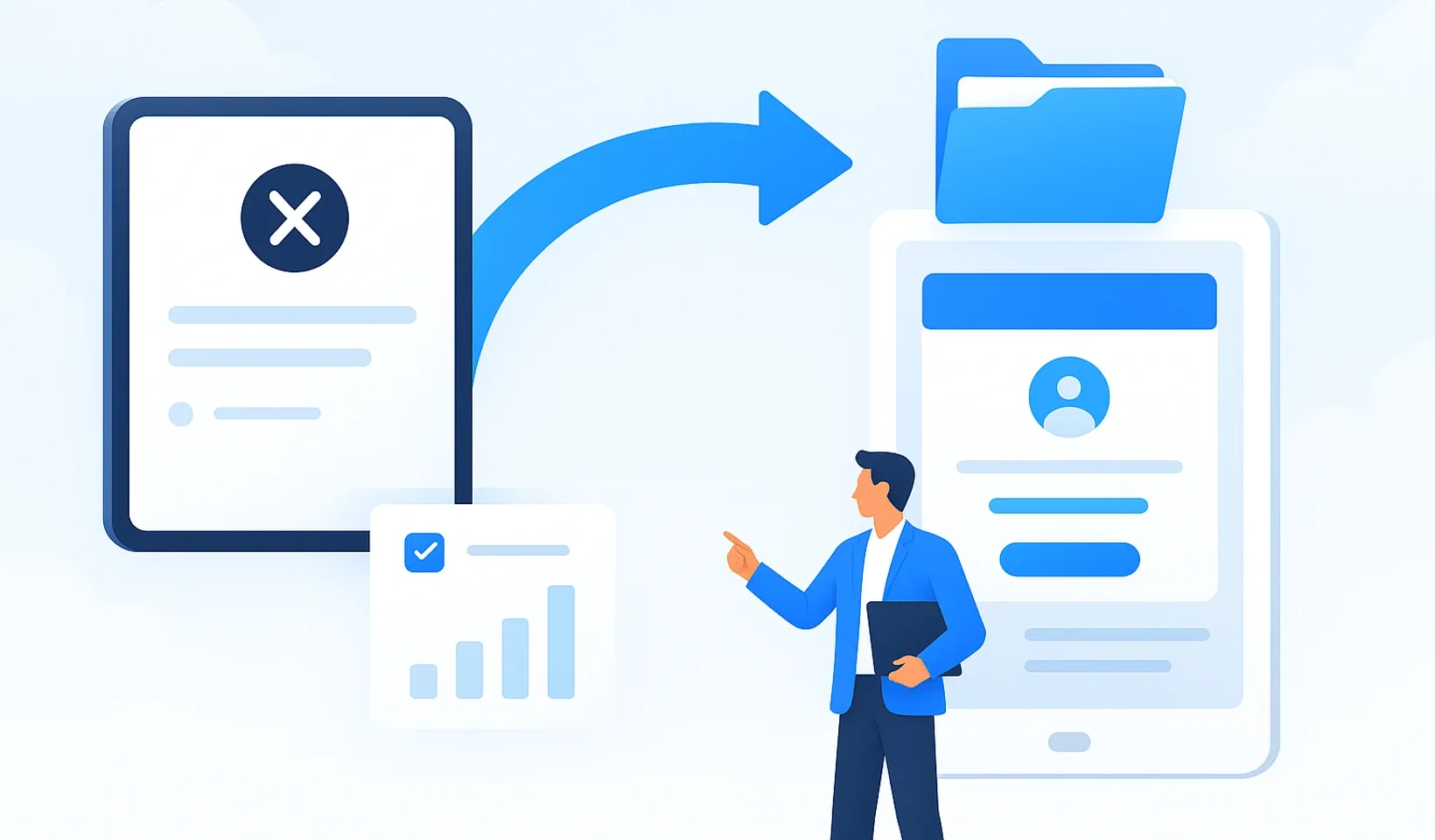
SC Training (formerly EdApp) was retired by SafetyCulture on March 31, 2026. Accounts were deactivated, and courses, user accounts, and completion records were deleted after that date. If your team’s training lived there, the question is no longer how to export it. It is how to rebuild a working training system from what you still have, without retyping everything from scratch.
This guide walks through exactly that: what happened and what it means for your data, what you can realistically still recover, how to rebuild with the least manual work, and how to make sure a platform shutdown can never take your training down again. The advice works no matter which tool you land on. Where a specific feature matters, I’ll name it plainly.
Platform migration means moving your training content, your team accounts, and your completion records from one system to another. A clean migration keeps three things intact: the material (lessons, docs, videos), the proof (who completed what and when), and the structure (how it was organized so people could find it). When the old platform is already gone, the material is usually recoverable, the structure is rebuildable, and the proof is the part that needs an honest plan B.
What exactly happened to SC Training (EdApp)?
The short timeline: SafetyCulture acquired EdApp in 2020 and rebranded it as SC Training in 2024. In 2026 SafetyCulture announced it would retire the product. Migration requests closed on March 20, 2026, and the platform shut down on March 31, 2026. After that date, accounts were deactivated and the remaining content, user accounts, and completion history were permanently deleted.
SafetyCulture offered a migration path onto its own platform, but with an important catch: on the free plan, users, groups, and completion data did not transfer. So even teams that “migrated” often arrived with their course content but without the records of who completed what.
That leaves three situations, and your next step depends on which one you are in:
- You exported before the shutdown. You have source files and reports. You are in the best position: skip ahead to the rebuild.
- You took the SafetyCulture migration. Your content probably made it. Check carefully whether your completion and acknowledgement records did too; on the free plan they did not, and if they are missing, treat them as gone.
- You did neither. The platform’s copy of your data is gone, and it is not recoverable through support. But your material almost certainly still exists wherever it lived before you uploaded it, and that is what the next section is about.
What can you still recover?
More than you might think, because a platform rarely holds the only copy of your material. Do an inventory before you conclude anything is lost:
- The original source files. The videos, PDFs, images, and slide decks you uploaded came from someone’s computer or a shared drive, and they are probably still there. Collect them into one folder, organized by topic. These are the crown jewels: even with the lesson formatting lost, the source content survives.
- Prior exports and reports. Ask the whole team. Anyone who ever pulled a completion report for an audit, or downloaded a course backup, may be sitting on exactly the records you thought were gone. Check email attachments too.
- Your SafetyCulture account, if you took the migration. Export what transferred while it is easy to reach.
- Email trails. Completion notifications and certificates that went out by email are weak but real evidence of who finished what.
- The people. Your trainers still know what the modules covered. Structure can be rebuilt from memory; exact wording cannot, which is why the source files matter most.
And an honest word about the records. If completion and acknowledgement history was not exported in time, it cannot be recreated, and you should not try to reconstruct it backwards. A spreadsheet of “we’re fairly sure everyone did this” is weak evidence that falls apart the moment someone checks it. The clean move is to re-run the sign-offs that actually matter (safety procedures, policies, handbooks) in the new system, so that from today you have timestamped, tamper-proof records instead of a gap you papered over.
How much work is the rebuild, honestly?
Let’s put numbers on it. Every figure below is an assumption, labeled as such, so you can swap in your own.
Assume you had 30 short modules. Rebuilding them from memory, at a conservative 90 minutes each for retyping, reformatting, and recreating quizzes, is 45 hours of work. If a manager’s loaded cost is 5,000 Ft (or roughly £10) an hour, that is 225,000 Ft of pure rework, plus the risk of losing the details that only existed in the old lessons.
Now assume your source files survived and your new tool can ingest them. Document import turns your Word and PDF files into draft lessons; video and audio conversion turns recordings into written guides. The hands-on work becomes reviewing and publishing drafts instead of retyping, which is realistically closer to one working day than a working week. The gap between those two numbers is the entire argument for choosing a tool that imports your material instead of making you start over.
One more deadline worth respecting: your own hiring calendar. If new people arrive next month and the onboarding path is not ready, every manager goes back to training in person, which is the exact cost the platform was supposed to remove. The real deadline is your next hire’s first day, not any date the old platform set.
What should you look for in the new home?
Because you are rebuilding from files rather than from a live export, prioritize tools that ingest existing material. Practically, that means:
- Document import. Can you upload your Word and PDF files, even a whole folder at once, and get lessons out of them? This is what collapses the rebuild time. In Corganize, for instance, you upload Word or PDF files (a full folder works) and each becomes a draft lesson you review and publish. If you kept anything in Notion, its “Markdown & CSV” export ZIP imports too. Everything comes in by upload, no live account sync needed, which is exactly right when the old platform no longer exists.
- Video and audio to text. If a chunk of your old training was screen recordings or narrated clips, look for a tool that turns a silent screen recording into a written step-by-step guide, and narrated video or audio into organized, searchable lessons. As a real reference point from our own testing: a 42-second silent screen recording came out as a clean 10-step guide. The recording is the raw material; the finished, searchable lesson is the product.
- Records you can trust. You want acknowledgements and policy sign-offs to be permanent proof (with a version and timestamp) that cannot be quietly deleted, so a platform’s business decision can never erase your evidence again.
- Real team roles and lifecycle. Owner, admin, trainer, staff, plus a way to mark people who have left so they stop taking up a paid seat while their history stays archived.
A quick honesty note on how these conversions work everywhere, not just in one product: the machine output is a draft. You review it and publish it. That is a feature, not a flaw. The tool does the heavy lifting of structuring your raw material, and you keep final control over what your team actually sees. For the deeper mechanics, see how to turn video into searchable company knowledge with AI transcription.
What NOT to do during the rebuild
Three mistakes turn a recoverable situation into a genuine loss:
- Don’t retype what you can import. If the source files exist, feeding them into an import is faster and more faithful than rebuilding from memory. Retyping is where details quietly change and quizzes get forgotten.
- Don’t fake the old records. Backfilling completion history you cannot prove is worse than admitting the gap. Re-collect the sign-offs that matter, fresh and timestamped. An auditor trusts a clean restart far more than a suspiciously complete reconstruction.
- Don’t try to make the new tool identical to the old one. You are not migrating a layout, you are migrating knowledge. Move the content, organize it in a clean folder structure, and improve as you go. If a module was outdated in the old system, this is your chance to fix it, not faithfully copy the mistake.
How do you get the team to actually use the new tool?
A rebuild fails quietly when the content moves but nobody opens it. Adoption is a separate job from the technical work, and it determines whether the effort was worth it.
- Announce it once, clearly. Tell the team the old tool is gone, the new one is here, and every login is the same place from now on. Ambiguity kills adoption; people default to “ask a colleague” the moment they are unsure where the answer lives.
- Start with one real path, not the whole library. Publish the onboarding path or the single most-used checklist first. Let people succeed with one thing before you ask them to trust the whole system.
- Assign, don’t hope. In most tools a role or an account is just a permission level; it does not start anything on its own. You have to actually assign a training plan to each person (or set up a group welcome pack so new hires get their plan automatically on first login). Decide who owns that assignment step, or it will not happen.
- Make managers use it in front of people. When a manager answers “how do I do X?” with “it’s in the knowledge base, let’s look together,” the team learns the new habit fast. When the manager answers from memory, the tool stays empty.
- Wire it into the moments that already exist. New hire day one, a policy change, a new menu item: each of those should trigger a lesson or an acknowledgement. Adoption sticks when the tool sits inside real events, not beside them. For a fuller playbook, see digital onboarding solutions for 2026.
A 10-day rebuild plan
Here is a realistic timeline you can run alongside normal work:
- Day 1 (3 hours): Inventory and gather. Collect every surviving source file, prior export, report, and certificate into one organized folder. This is the step that determines everything after it.
- Day 2: Pick your new home. Check it can import your document files and convert your video and audio. Start a trial and confirm the import actually works with two of your real files before committing.
- Days 3 to 5: Bulk-import your document files and let them become draft lessons. Feed in your screen recordings and narrated clips. Work through the drafts, review, edit, publish. Rebuild your folder structure so things are findable.
- Day 6: Import your team from a CSV. Set roles. Mark anyone who has left as departed so they do not take a seat.
- Day 7: Rebuild your most important training path and re-send every policy that needs a valid acknowledgement, so the record starts fresh and provable.
- Days 8 to 9: Soft launch with a small group. Fix what is confusing. Check that quizzes and sign-offs record correctly.
- Day 10: Announce to the whole team, assign plans, and set the expectation that this is the single source of truth now.
Self-check: is your rebuild actually done?
Run this list before you call it finished:
- Every surviving source video and document is backed up in your own storage, independent of any training platform.
- The sign-offs that matter (safety, policies, handbook) have been re-collected in the new system with timestamps.
- Your core onboarding path exists in the new tool and you have tested it as a staff member.
- Departed employees are marked so you are not paying for empty seats.
- At least one manager has answered a real question using the new knowledge base in front of the team.
So this never happens again
Two habits make the next shutdown a non-event. First, source files live in your own storage, always; a platform gets a copy, never the original. Second, records must be exportable at any time, and anything legally important should be exported (or held in a system you trust) on a regular schedule. A tool shutting down should cost you an afternoon of re-pointing links, not your team’s training history. If this round taught you anything, let it be that.
Frequently asked questions
Is SC Training the same as EdApp?
Yes. EdApp was acquired by SafetyCulture in 2020 and rebranded as SC Training in 2024. SafetyCulture retired the platform on March 31, 2026, so content and accounts under either name are affected the same way.
Can I still export my content from SC Training?
No. Migration requests closed on March 20, 2026, and after the March 31 shutdown accounts were deactivated and the remaining data was deleted. Work from what you still hold: original source files, prior exports and reports, email trails, and your SafetyCulture account if you took the migration.
Do I have to rebuild every lesson by hand in a new tool?
No. If the new tool imports document files, you can upload your surviving Word and PDF content and get draft lessons back. Screen recordings and narrated clips can be converted into written guides too. You review and publish the drafts rather than retyping everything.
What about the completion records I lost?
Deleted completion history cannot be recreated, and reconstructing it from memory makes weak evidence. Re-run the sign-offs that matter (policies, safety procedures) in the new system, so from today you hold timestamped, tamper-proof records instead of a gap.
How long does rebuilding a small team's training take?
Plan on about 10 days working alongside normal duties: an afternoon to gather what survived, a few days to import and review drafts, and a short soft launch. The gathering step determines everything after it, so do it first.
Move your training somewhere it turns back into knowledge
Upload your exported documents, videos, and recordings, and get organized, searchable, assignable training out the other side. Try the full system for 5 days.
See how Corganize handles migration